Showroom Cleaning: Keep Glass, Floors and Displays Ready for Customers
Yongoy Editorial
Verified Cleaning Expert
Published 16 Oct 2026
⏱ 3 Min Read
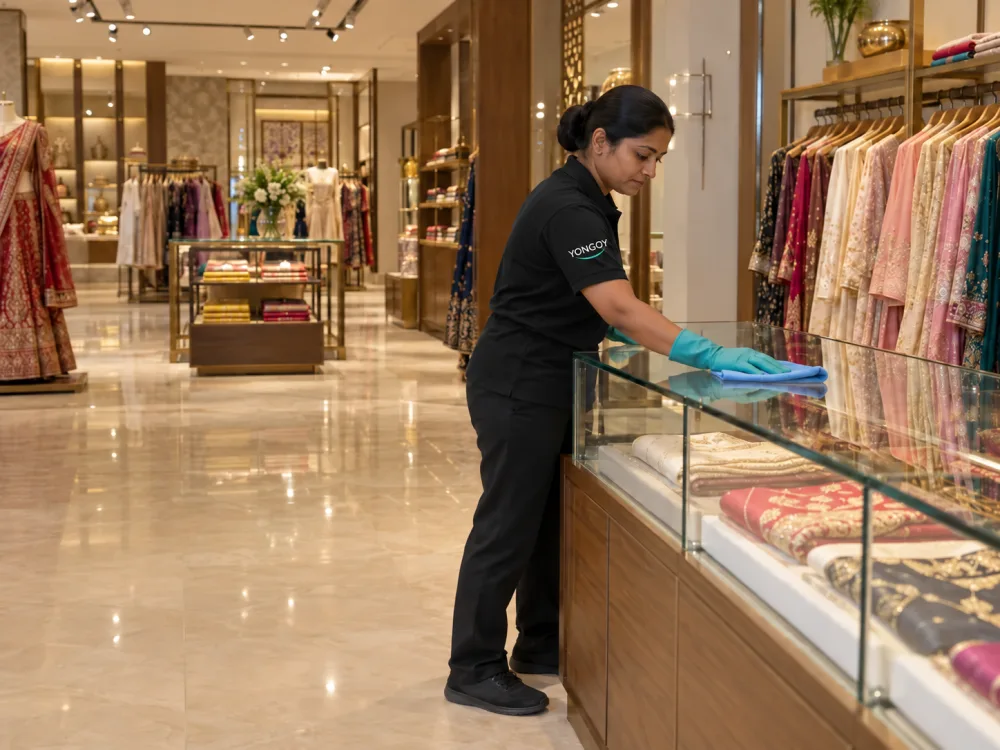
A showroom needs to look welcoming without putting merchandise or finishes at risk. The best starting point is a cleaning scope that reflects how customers move through the space and how your display team handles products.
Prioritize the customer journey
Walk from the entrance to reception, displays, trial rooms and the billing desk. Notice fingerprints on doors, dust on shelf edges, marks around seating and dirt tracked into the entrance. These small details often matter as much as the large open floor.
Create zones so the team can work without surrounding stock with wet equipment. Confirm whether cleaning will happen before opening, after closing or during a quiet period with parts of the showroom temporarily unavailable.
Protect displays and merchandise
Ask your staff to remove fragile items and high-value merchandise from the agreed work area. Make clear who may open display cabinets and who will return stock after cleaning. Cleaners should not decide how to lift, rearrange or store unfamiliar products.
For glass, distinguish accessible display panels from exterior glazing, high-level windows and coated surfaces. Adhesive residue, scratches and etched marks may need separate assessment. A glass-cleaning task is not a guarantee that every mark can be removed.
Choose floor care by material
Marble, tile, vinyl and wooden floors have different care requirements. Identify the surface and any existing finish before agreeing to machine scrubbing or polishing. Share the manufacturer’s care guidance if available and flag loose edges, damaged joints or previous repairs.
Floor polishing, stain treatment and ordinary scrubbing are different jobs. Ask which one the quote covers. Keep equipment away from delicate display bases and ensure the work sequence leaves a clear, dry route for staff and customers.
Include the easily missed details
Display plinths, accessible lighting ledges, mirror edges and seating bases collect dust that may not be obvious from the doorway. Include reachable surfaces in the scope, but define how high-level work will be handled instead of expecting staff to improvise access.
Trial rooms and customer lounges deserve their own checklist. Specify mirrors, handles, benches and floor corners. Upholstered seating treatment should be assessed separately so that fabric suitability and drying requirements are understood before the visit.
Keep the finish between visits
Assign a short opening checklist: check entrance glass, remove visible debris, review the billing desk and inspect customer seating. Address spills promptly with the method approved for that surface rather than reaching for the same product everywhere.
At a deep-clean handover, inspect from normal customer viewing angles. Walk the same route you used when planning the job and compare it to the scope. Record any finish damage separately from dirt so future visits have a clear reference point.
Your practical checklist
- Map entrance, displays, trial rooms and billing areas.
- Have staff secure merchandise and fragile pieces.
- Identify flooring and existing coatings.
- Inspect glass and floors before reopening.
Plan your next clean with Yongoy
Share your location, approximate area, photographs and the areas you want covered. Our team can discuss access, timing and the scope before you confirm a visit. Explore the relevant cleaning service or request a tailored quote. You can also call +91 93-1919-3234.
Need Professional Cleaning Help?
Explore our home and commercial services, or request a quote for your space.