How to Plan Deep Cleaning for a Cloud Kitchen, Cafe or Restaurant
Yongoy Editorial
Verified Cleaning Expert
Published 16 Oct 2026
⏱ 3 Min Read
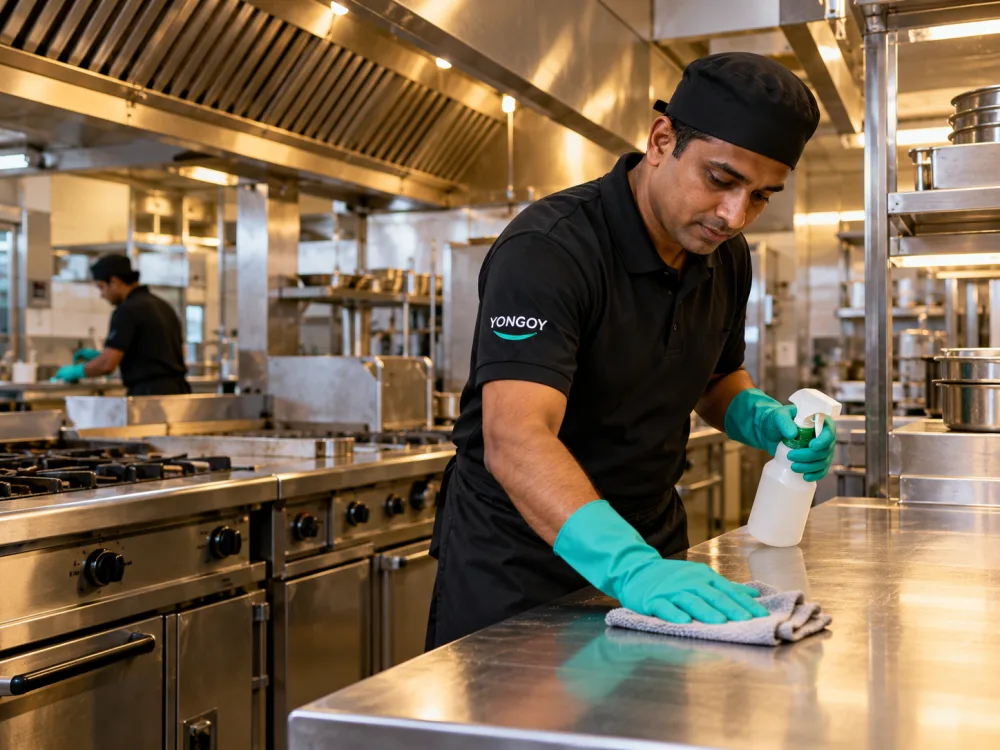
Food-service spaces accumulate different kinds of dirt in different zones. A useful cleaning plan separates preparation surfaces, cooking areas, dining spaces and washrooms, then gives each zone a clear scope and a realistic time window.
Map the kitchen before the team arrives
Start with a list of accessible worktops, sinks, backsplashes, shelves, floor areas and equipment exteriors. Mark places with heavy grease, restricted access or delicate finishes. Pictures help explain the condition, but an on-site assessment may still be needed for a complex space.
Distinguish surface cleaning from specialist equipment servicing. A standard deep clean should not automatically include dismantling appliances, opening electrical housings, entering ducts or servicing gas connections. Confirm any specialist work separately with an appropriate provider.
Prepare food and equipment properly
Schedule the visit when food preparation is stopped. Your staff should remove exposed food, utensils and packaging from the cleaning area and protect stock in adjacent spaces. Identify who is responsible for emptying shelves, clearing equipment and supervising access to storage.
Follow equipment instructions for shutdown and isolation. The cleaning crew should know which appliances remain energized and which areas they must avoid. Never assume that an appliance can be sprayed or moved simply because its exterior looks like stainless steel.
Match the method to the surface
A greasy cooking-line exterior and a customer-facing wooden table need different treatment. Ask how the team will select products for each material and whether a small inconspicuous test is appropriate. Abrasive tools can damage finishes even when they remove visible buildup.
Cleaning products should be used according to their labels, including any dilution, contact-time and rinsing directions relevant to the surface. Keep products in labeled containers and do not mix cleaning chemicals. The goal is a defined cleaning process, not a promise that a stronger smell means a better result.
Do not overlook the dining room
Include chair frames, table bases, service counters, accessible glass and floor edges in the front-of-house scope. A refreshed kitchen alone will not address the marks customers see near seating, entrances and waiting areas.
Washrooms need their own tools and a separate work sequence. Confirm how ordinary waste will be collected and where it can be placed. Grease traps, pest treatment and duct interiors should be listed explicitly if required rather than silently included in a general cleaning quote.
Reopen with a handover checklist
Before restarting operations, have your representative inspect the agreed zones and confirm that surfaces are ready for their intended use. Check for residue, remaining wet patches and items that were moved. Your kitchen team should follow its own reopening procedures for food-contact equipment.
Use a simple log after the visit: daily spill response, scheduled surface cleaning and periodic detailed tasks. Allocate each task to a named role. Deep cleaning supports routine housekeeping; it does not replace your operating procedures or establish a food-safety certification.
Your practical checklist
- Remove exposed food and clear the agreed work areas.
- Separate appliance servicing from surface cleaning.
- Agree on accessible hood, floor and counter tasks.
- Complete a walkthrough before restarting preparation.
Plan your next clean with Yongoy
Share your location, approximate area, photographs and the areas you want covered. Our team can discuss access, timing and the scope before you confirm a visit. Explore the relevant cleaning service or request a tailored quote. You can also call +91 93-1919-3234.
Need Professional Cleaning Help?
Explore our home and commercial services, or request a quote for your space.