Office Deep Cleaning: A Practical Checklist for Delhi NCR Workplaces
Yongoy Editorial
Verified Cleaning Expert
Published 16 Oct 2026
⏱ 3 Min Read
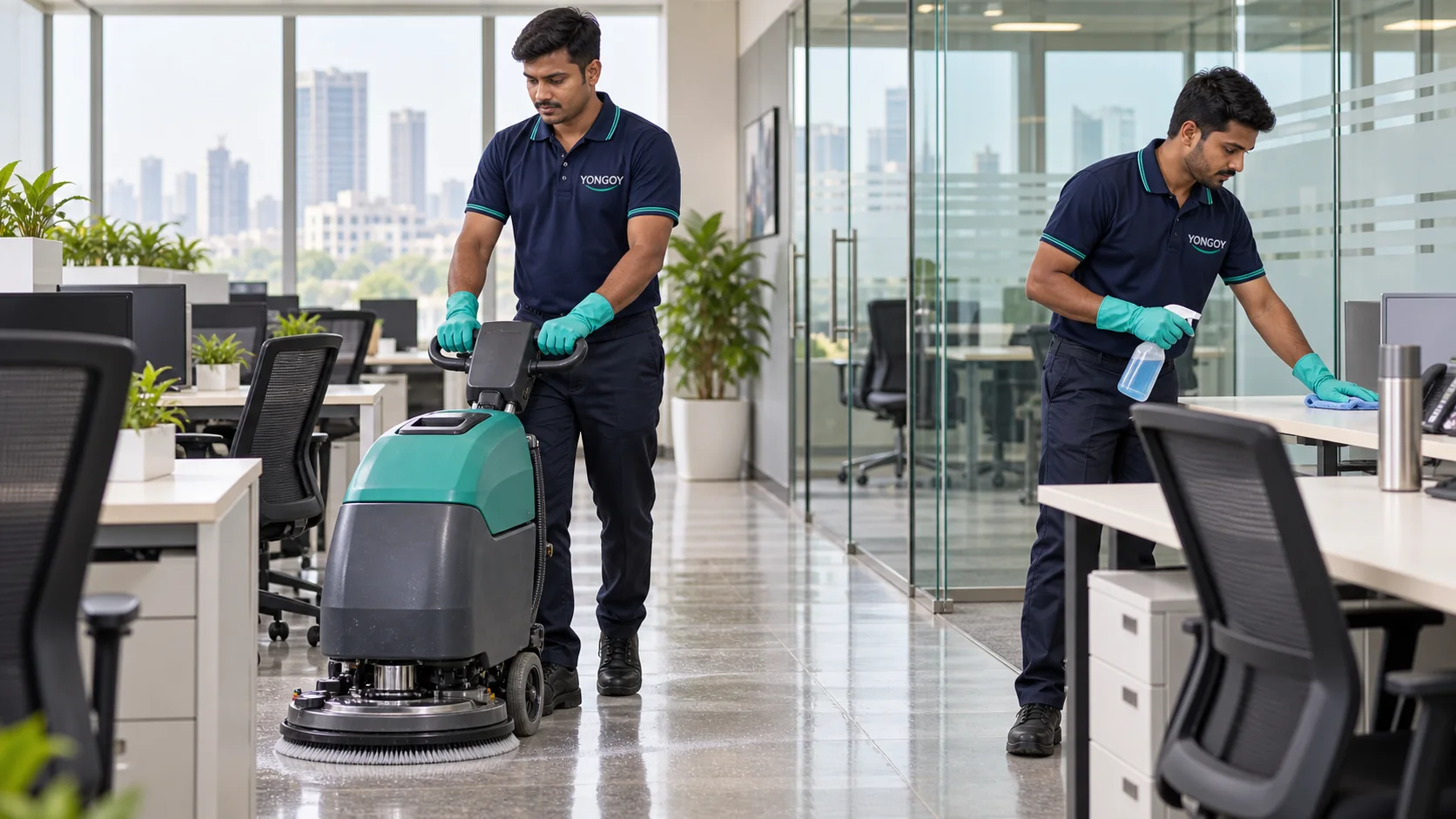
A good office clean starts with a clear plan, not a longer list of chemicals. Whether you manage a small team or a busy multi-floor workspace, separating daily upkeep from periodic detailed cleaning makes the job easier to schedule and inspect.
Start with a walkthrough
Walk through the office before requesting a quote. Note the floor area, number of workstations, washrooms, meeting rooms and pantry spaces. Photograph stubborn marks and identify surfaces such as natural stone, wood veneer or upholstered partitions that need a suitable cleaning method.
Also record practical constraints: visitor hours, lift access, parking for equipment, water availability and any rooms that require an employee escort. A useful scope names the actual spaces and tasks rather than simply promising a complete office clean.
Give workstations a separate scope
Desks are easier to clean when staff remove paperwork, mugs and personal belongings beforehand. Agree who will move accessories and who may touch electronic equipment. Cleaners should not unplug servers, open computer cases or move confidential documents as part of a routine surface clean.
Include accessible desk surfaces, chair frames, cabinet exteriors and partition ledges. Ask separately about fabric-chair shampooing or carpet treatment, because these tasks may need different tools, extra drying time and their own assessment.
Work through common areas systematically
Reception, meeting rooms and shared corridors deserve attention because they carry much of the daily footfall. Include door handles, accessible glass panels, table surfaces and floor edges in the checklist. Cleaning from higher accessible surfaces toward the floor helps avoid repeating finished work.
Treat pantry and washroom tools as separate sets. Specify sinks, taps, countertops, fittings and accessible corners, and identify storage that staff must empty first. Waste handling should follow your office arrangements; ordinary housekeeping should not be assumed to include confidential document disposal.
Schedule around the working day
Choose a quieter period and confirm the sequence with your facility contact. Some spaces can be cleaned in zones while others remain available, but wet floors and equipment routes still need to be managed. Share a room-by-room order with staff so that a meeting is not booked in the middle of the visit.
Ask about expected drying time for the selected method instead of assuming every area will be ready immediately. Carpet or upholstery work can affect when a room returns to use. Keep walkways clear and allow the team to finish inspection before furniture is put back.
Inspect results and maintain the routine
At handover, compare the work against the agreed scope. Check floor edges, visible glass streaks, desk ledges and pantry corners in ordinary room lighting. Point out missed areas while the crew and your representative can inspect them together.
After the deep clean, create a simple daily and weekly upkeep schedule. Entry mats, cleared desks and prompt attention to spills help maintain the finish. Decide the next detailed-cleaning interval from occupancy, footfall and visible buildup rather than choosing the same frequency for every office.
Your practical checklist
- List each room and its approximate size.
- Clear desks and secure documents before the visit.
- Confirm electronics, upholstery and carpet exclusions.
- Plan access, drying time and a handover walkthrough.
Plan your next clean with Yongoy
Share your location, approximate area, photographs and the areas you want covered. Our team can discuss access, timing and the scope before you confirm a visit. Explore the relevant cleaning service or request a tailored quote. You can also call +91 93-1919-3234.
Need Professional Cleaning Help?
Explore our home and commercial services, or request a quote for your space.